

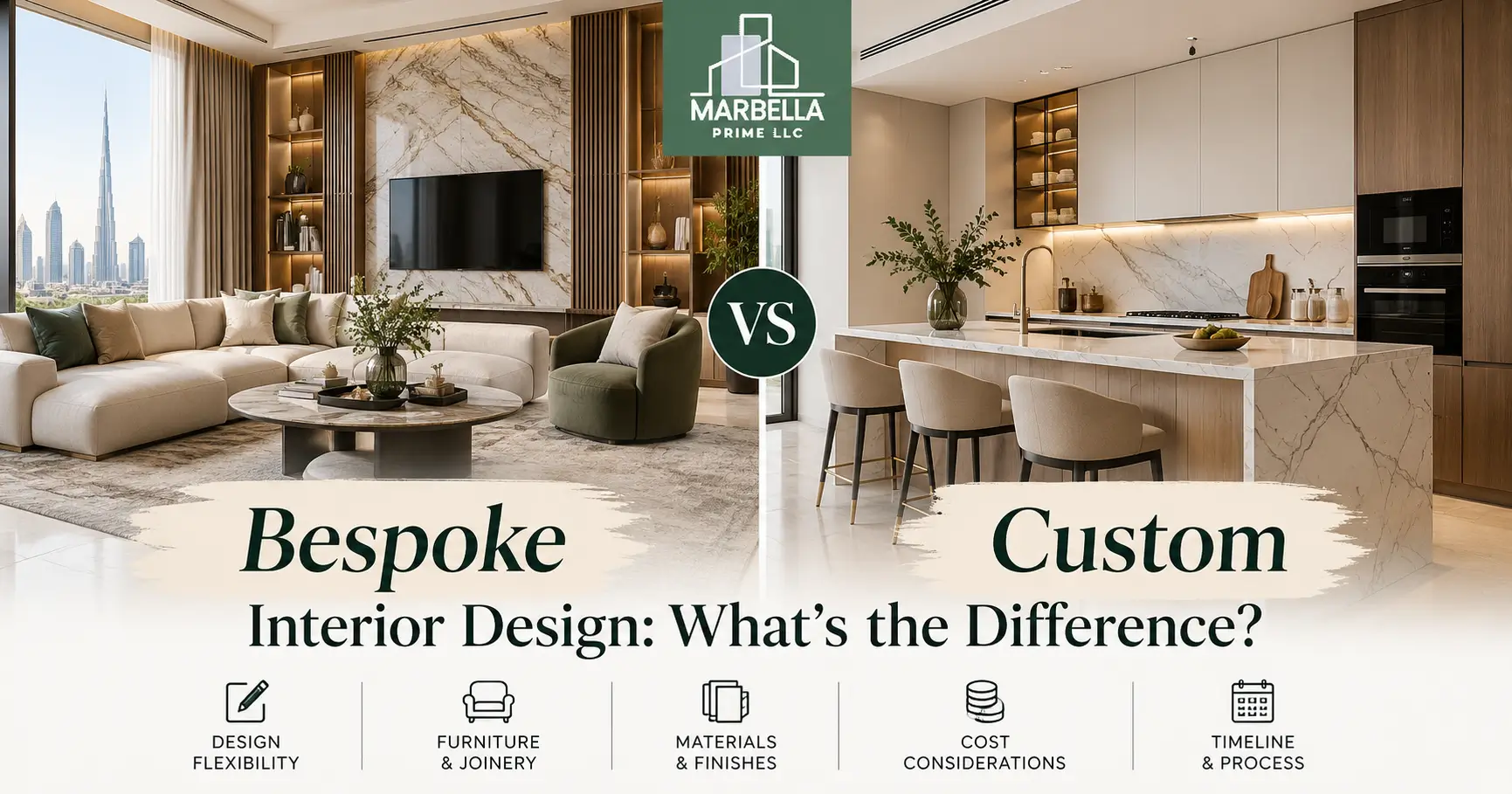
Bespoke vs Custom Interior Design: What’s the Difference?
Planning a new interior often involves choosing between standard, custom and bespoke design. These terms can sound similar, but they may describe different levels of personalisation.
The main difference between bespoke and custom interior design is usually the starting point. Custom design can involve adapting existing products, layouts or specifications. Bespoke design often begins with an individual brief, with furniture, finishes and interior details developed around specific requirements.
However, there is no universal industry rule separating the two. Some designers use custom and bespoke interchangeably.
For homeowners in Dubai, the more useful question is not which term sounds more luxurious. It is how much design flexibility, technical planning and individual detailing the project actually includes.
What Is Bespoke Interior Design?
Bespoke interior design means planning a space around the people who will use it.
The designer considers your room size, daily routine, storage needs and personal style. Furniture and other details can then be made to fit those needs.
A bespoke interior may include:
- Furniture made for a specific room
- Built-in wardrobes and storage
- Custom kitchen cabinets
- Special wall finishes
- Lighting planned around the furniture
- A room layout designed for your family
Example: Imagine a villa living room with large windows and an unusual wall shape.
You want comfortable seating for guests, a hidden TV unit and enough space for children to move around.
A bespoke design can bring these needs together in one plan.
Instead of buying separate items and hoping they fit, you plan the room before choosing the furniture.
What Is Custom Interior Design?
Custom interior design means changing or creating design features to meet your needs.
Sometimes you start with an existing product and choose different sizes, colours or materials.
For example, you may find a wardrobe design you like. The supplier lets you change the height, add drawers and choose a different finish.
This is a common form of custom design.
However, custom design can also mean creating a completely new piece of furniture. It is not always limited to changing existing products.
That is why you should ask what the company means by custom before placing an order.
Read More: How to Choose a Kitchen Renovation Contractor in Dubai: 9 Things to Check
Bespoke vs Custom Interior Design: Side-by-Side Comparison
Feature | Custom Interior Design | Bespoke Interior Design |
Starting point | Existing options or an individual brief | Usually an individual brief |
Design flexibility | Depends on the provider and scope | Often extensive |
Furniture | Modified, made-to-order or original pieces | Frequently individually specified pieces |
Space planning | Adapted to the property’s needs | Developed around specific requirements |
Materials | Selected or specially specified | Selected or specially specified |
Cost | Depends on complexity and specifications | Depends on complexity and specifications |
Timeline | Depends on design and manufacturing | Depends on design and manufacturing |
Main benefit | Personalisation to the required extent | Highly coordinated individual design |
Neither approach is automatically better.
A well-designed custom interior can be more practical than an elaborate bespoke scheme that does not suit the owner’s lifestyle.
The quality of the design brief, planning and execution matters more than the terminology.
Five Differences That Matter to Homeowners
1. Design Flexibility
One of the first questions to ask is how much freedom the designer offers.
Some custom furniture suppliers allow customers to change dimensions, colours and finishes within an established product range.
A more individual design process may allow changes to the furniture’s construction, proportions, storage arrangement and integration with surrounding architectural features.
For example, a homeowner may need a study desk that fits an irregular wall, conceals equipment and connects with nearby shelving.
An adapted standard product may solve part of the problem. A fully individually designed unit may address all three requirements together.
The right option depends on the room and how it will be used.
2. Furniture and Joinery
Furniture and joinery are common areas where customisation becomes particularly valuable.
Joinery refers to fitted or constructed timber-based elements such as cabinets, wardrobes, shelving and wall units.
Consider a bedroom wardrobe.
A standard wardrobe may provide fixed dimensions and internal arrangements.
A custom wardrobe may allow adjustments to its height, width, finish and storage configuration.
A bespoke wardrobe could be designed around the exact room geometry, personal clothing collection, lighting requirements and adjacent furniture.
In practice, suppliers may describe both of the last two options as custom-made.
Ask for drawings and specifications rather than relying on the label.
3. Materials and Finishes
Materials have a major influence on an interior’s appearance, durability and maintenance requirements.
Both custom and bespoke projects can use premium materials.
These might include engineered stone, natural stone, timber veneers, decorative glass, metal finishes and specialist fabrics.
The distinction is often how those materials are selected and coordinated.
For example, an individual interior scheme might specify a consistent combination of wood veneer, stone and metal detailing across the kitchen, living room and entrance.
The result depends on thoughtful coordination, not simply choosing expensive materials.
Dubai homeowners should also consider practical factors such as sunlight exposure, cleaning requirements, moisture, wear and replacement availability.
A finish that looks attractive in a sample should also be appropriate for its intended location.
4. Budget and Project Costs
Is bespoke interior design more expensive than custom design?
Not necessarily.
A project involving extensive original detailing, specialist manufacturing and complex installation may cost more than one using established products.
However, a highly specified custom project can also be expensive.
The final budget depends on several factors:
- Property size and room dimensions
- Number of individually manufactured items
- Material selection
- Design complexity
- Technical drawings and coordination
- Supplier and manufacturing requirements
- Installation conditions
- Revisions and changes during the project
When comparing quotations, check what is actually included.
One proposal may cover design drawings only. Another may include materials, manufacturing, installation and site coordination.
Comparing the headline prices without comparing the scope can lead to an incorrect decision.
Read more: Top 10 Interior Fit Out Companies in Dubai (2026): Services, Specialisations & Comparison
5. Project Timelines
Custom and bespoke interiors can both require additional time compared with purchasing readily available furniture.
A project may involve measurements, concept development, design approvals, technical drawings, material sampling, manufacturing and installation.
Lead times depend on the number of items, supplier capacity, material availability and site readiness.
For example, a made-to-measure wardrobe may be relatively straightforward, while an interior scheme involving multiple rooms and specialist joinery requires coordination between several trades.
Before approving a project, ask for a realistic schedule that identifies design approvals, manufacturing milestones and installation dependencies.
Avoid relying on a completion date that does not account for material procurement or building access requirements.
Practical Examples for Dubai Homes
The differences become clearer when looking at common interior projects.
Example 1: Kitchen Design
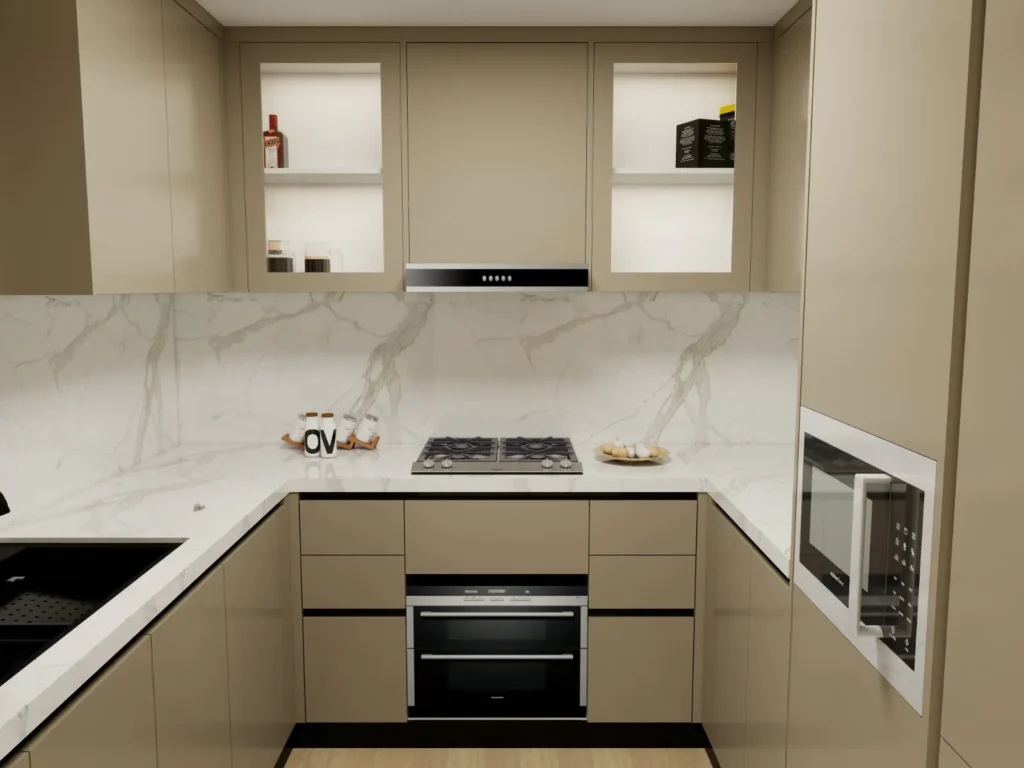
A homeowner renovating a Dubai apartment may choose a modular kitchen with customised cabinet sizes, finishes and worktops.
This can be a practical solution when the room has a straightforward layout and the available system meets the homeowner’s requirements.
A more individually developed kitchen might include specially designed storage, unusual cabinet proportions, integrated appliances and detailed coordination with lighting and stonework.
Both approaches can produce an attractive kitchen.
The decision should be based on functionality, specifications and budget.
Example 2: Walk-In Wardrobe
A villa bedroom may have sufficient space for a walk-in wardrobe.
An adaptable cabinetry system could provide hanging rails, drawers and shelving in a preferred finish.
An individually designed dressing room might also incorporate a central island, concealed lighting, dedicated accessory storage and cabinetry shaped around architectural features.
The second approach may offer greater integration, but it also requires more detailed planning.
Example 3: Living Room
A homeowner may furnish a living room using selected sofas, tables and decorative lighting.
Customisation might involve changing upholstery, dimensions or furniture finishes.
A bespoke interior concept could coordinate the seating layout, fitted media wall, ceiling details, lighting and architectural finishes as one design.
This can be particularly useful where the room has unusual proportions or multiple uses.
These examples illustrate possible design approaches, not completed Marbella Prime LLC projects.
Read More: Smart Small Apartment Renovation Ideas for Dubai Homes
Which Approach Is Right for Your Property?
The best choice depends on the outcome you want.
Consider adaptable custom solutions when:
- Your room has relatively standard dimensions.
- Existing furniture or cabinetry systems meet most requirements.
- You need specific adjustments rather than a completely new design.
- You want to concentrate the budget on selected features.
Consider a more extensively bespoke approach when:
- Your property has unusual dimensions or architectural features.
- You need integrated storage or specialist furniture.
- Multiple rooms require a coordinated design.
- Standard products cannot meet your practical requirements.
- You want detailed control over materials, proportions and finishing elements.
Many successful interiors combine both approaches.
For example, a villa might include bespoke wardrobes and a custom media wall alongside carefully selected ready-made seating and decorative furniture.
This can direct the budget towards the areas where individual design adds the most value.
Questions to Ask an Interior Designer Before Starting
Before choosing a design company in Dubai, request a clear explanation of the proposed work.
Important questions include:
- Will the design be developed from scratch or adapted from an existing concept?
- Which furniture and joinery elements will be made to measure?
- What drawings and material specifications are included?
- How many design revisions are permitted?
- Who is responsible for manufacturing and installation?
- Are material procurement and delivery included?
- What happens if a selected material becomes unavailable?
- Which project approvals or building permissions may be required?
- How will design changes affect the budget and timeline?
- What is excluded from the quotation?
These questions help establish clear expectations before work begins.
For Dubai apartments and villas, it is also worth confirming any building-management or community requirements that may affect renovation work, deliveries or installation access.
How Marbella Prime LLC Can Help
Marbella Prime LLC provides interior design and renovation services in Dubai, including bespoke interior design for residential and commercial properties.
Its published services include interior planning, renovation and custom joinery-related work.
For homeowners exploring an individual interior project, the first step is to define the property requirements, preferred design direction and expected scope.
You can explore Marbella Prime LLC’s bespoke interior design services in Dubai for more information about the available services.
Final Thoughts
Bespoke and custom interior design can both help you create a home that suits your needs.
The main thing is to understand what you are paying for.
If you only need a few changes, a custom solution may be enough. If your room needs a new layout or special furniture, a more detailed design may be worth considering.
Choose the approach that solves your space problems, fits your budget and makes your home easier to use.
Frequently Asked Questions
The terms often overlap. Bespoke commonly describes an individually developed design, while custom can describe either modifications to existing products or fully original work. Always confirm the actual scope.
Made-to-measure furniture is manufactured to specified dimensions. Bespoke furniture may involve original design decisions about construction, proportions, materials and functionality. Suppliers may use these terms differently.
No. Costs depend on the scope, materials, complexity, manufacturing and installation requirements. The word bespoke does not establish a particular price level.
Yes. Combining these approaches can help balance individuality, practicality and budget.
It can take longer when original design development, specialist manufacturing or complex installation is required. However, timelines depend on the actual project rather than its label.
Yes. Individual space planning and fitted storage can be particularly useful in compact rooms where standard furniture does not use the available space effectively.
A quotation should clearly identify the scope, design deliverables, materials, responsibilities, payment terms, exclusions and relevant project milestones.
Consider the layout, design requirements, budget and amount of individual detailing needed. A combination of custom and bespoke elements may be more appropriate than using one approach throughout the property.
Latest News & articles.




Contact Info
- Office M-01-66, Commercial Bank of Dubai Building (M-01), Al Khabeesi, Deira, Dubai
- info@marbellaprimellc.com
- +971 52 673 4732
- www.marbellaprimellc.com