

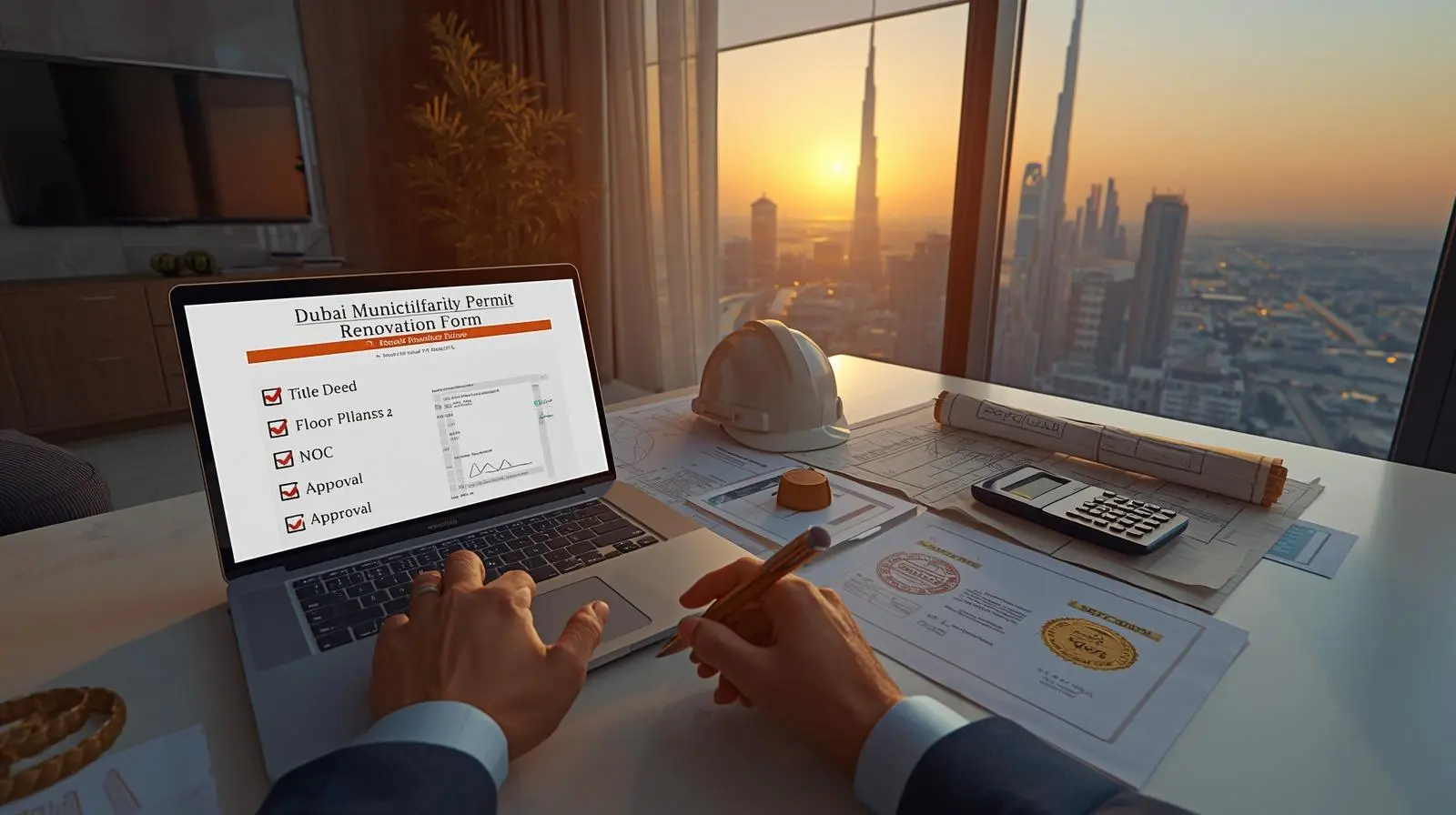
Renovation Permit Dubai: 2026 Requirements, Costs & NOC Guide
Planning to renovate an apartment, villa or office in Dubai? Before any demolition or fit‑out begins, you may need approval from the relevant authority, developer or building management. The exact requirements depend on your property type, location and the scope of renovation.
This 2026 guide explains:
- How renovation approval works in Dubai
- What documents you typically need
- When a developer or building NOC is required (Emaar, Nakheel, etc.)
- How the application and inspection process works
- What to check before starting renovation work
If you’re unsure which approvals apply to your project, Marbella Prime can review your plans, confirm the required permits and NOCs, and coordinate the process before construction starts.
Renovation Permit Requirements in Dubai (2026)
The documents and approvals required for renovation work in Dubai vary by property, location and scope. Always confirm the rules that apply to your specific building or community before submitting an application.
Commonly Requested Documents
Depending on the authority or developer, you may be asked for:
Property documents
- Title deed (owner) or Ejari + owner NOC (tenant, where applicable)
Identification
- Emirates ID (and passport copy if required)
Drawings
- Existing floor plan / as‑built drawings
- Proposed renovation drawings (architectural; structural/MEP if relevant)
Project details
- Scope of work (clear, itemized description of changes)
- Site photos (current condition)
Contractor / consultant information
- DED trade licence (activity matching the works)
- Liability insurance certificate (often minimum AED 1,000,000)
- Consultant/engineer stamps where required
NOCs and additional technical documents
- Developer or building‑management NOC (Emaar, Nakheel, DAMAC, tower management, etc.)
- Structural drawings & calculations (if load‑bearing elements are affected)
- MEP drawings (electrical, plumbing, HVAC, fire) for affected systems
Quick Checklist Before You Start
Use this as a pre‑submission sanity check:
- Property: Confirm who manages or regulates the property (DM, Trakhees, DDA, developer, building management).
- Drawings: Prepare existing and proposed layouts in the required format.
- NOC: Check whether your developer or building management requires an NOC before any authority permit.
- Contractor: Ensure your renovation contractor holds the correct licence, insurance and, where needed, Trakhees/DM registration.
- Approval: Do not begin any work that requires permission until the relevant approval has been issued.
Requirements can vary between properties and renovation scopes. Always confirm the applicable rules for your project before starting work.
Who Approves Renovation Work in Dubai?
There isn’t a single approval route for every renovation in Dubai. Whether you are managing a residential project or planning an office renovation, the authority or organisation involved depends on your property’s location, developer, and specific scope of work.
Depending on the project, you may need to deal with one or more of the following:
- Dubai Municipality (DM) – Main authority for many mainland building permits.
- Dubai Development Authority (DDA) – Oversees certain free‑zone and development areas.
- Trakhees – Approves works in specific free zones and communities (e.g., parts of Palm Jumeirah) and issues construction permits via CED.
- Property developers – Emaar, Nakheel, DAMAC, Meraas, Dubai Holding, etc.
- Community management – For gated communities with their own modification rules.
- Building management – For towers and managed residential/commercial buildings.
- Other authorities – As applicable to the property and zone.
For example, an apartment in a managed residential development may require both a building/developer NOC and a government permit, while a mainland villa may only need a Dubai Municipality building permit. The first step is to identify which authority and property‑management rules apply before preparing your application.
Explore our: Apartment Renovation Cost in Dubai: 2026 Price Guide
How to Get Renovation Approval in Dubai (Step‑by‑Step)
Follow this end‑to‑end process to move from concept to completion certificate.
1. Identify the Applicable Authority
Determine which authority, developer or building management controls renovation approvals for your property:
- Check your title deed, community guidelines and building rules.
- Confirm whether your project falls under Dubai Municipality, Trakhees, DDA, a developer NOC process, or a combination.
If you’re unsure, consult a fit‑out company or consultant experienced with Dubai permits.
2. Check the Renovation Rules
Confirm whether your planned work affects:
- Layout or partitions
- Walls (especially load‑bearing)
- Plumbing, electrical, HVAC or fire systems
- Structure, façade or external elements
- Wet areas (kitchen, bathroom, maid’s room)
Different triggers lead to different approval levels (NOC only vs. full building permit).
3. Prepare the Required Documents
Gather the documents listed in the “Renovation Permit Requirements” section:
- Property and ID documents
- Existing and proposed drawings
- Scope of work and site photos
- Contractor licence, insurance and, where required, consultant stamps
Ensure drawings are clear, dimensioned and in the format required by the authority or developer.
4. Obtain the Required NOC
If your building or developer requires a No Objection Certificate (NOC):
- Submit your application with drawings, scope of work, contractor details and fees.
- Address any revision requests promptly.
- Once approved, you’ll receive an NOC letter specifying allowed works and conditions.
Do not start work that falls under the NOC scope until this is issued.
5. Submit the Application
Submit the required documents through the applicable authority or property‑management process:
- Dubai Municipality / Trakhees / DDA portals, or
- Developer/community management systems
Include all supporting documents and pay the applicable fees.
6. Respond to Comments
The reviewing authority or property management may request:
- Revisions to drawings
- Additional documents or clarifications
- Changes to the proposed scope
Respond quickly to avoid delays.
7. Receive Approval
Once approvals are granted:
- Review all conditions carefully (working hours, noise restrictions, waste disposal, etc.).
- Share the approved drawings and conditions with your contractor.
Ensure the contractor follows the approved scope exactly.
8. Complete the Renovation
Carry out the work according to:
- Approved plans
- Property rules (quiet hours, access, safety)
- Authority and developer conditions
Avoid mid‑project changes that invalidate the approval; if changes are needed, confirm whether a revised submission is required.
9. Complete Any Required Inspection or Close‑Out
Some projects require:
- Final inspection by the authority or developer
- Submission of as‑built drawings or test reports
- Completion documentation or close‑out forms
Once everything is compliant, you’ll receive a completion certificate or final approval letter. Keep these documents for future sales, rentals and insurance.
Apartment vs. Villa Renovation Approvals in Dubai
Renovation requirements differ significantly between apartments and villas. Don’t assume that an approval required for one property type automatically applies to another.
Apartment Renovation Approvals
Apartment owners and tenants may need to follow:
- Building‑management rules – Many towers have strict fit‑out and modification policies.
- Developer requirements – For communities with a master developer (Emaar, Nakheel, etc.).
- Community guidelines – For managed residential developments.
- NOC procedures – Internal NOC before any authority permit.
- Authority requirements – Dubai Municipality, DDA or Trakhees, depending on location and scope.
- Restrictions on structural or external changes – Most apartments do not allow structural changes or external alterations.
Before starting an apartment renovation, check whether your building requires approval for:
- Layout changes and wall removal
- Wet‑area modifications (kitchen, bathroom)
- MEP work (AC, electrical, plumbing, fire)
- Flooring changes (especially hard flooring without acoustic underlay)
- Balcony enclosure or external alterations
Villa Renovation Approvals
Villa renovation projects often involve a different approval route, particularly when the work includes:
- Extensions or additional rooms/floors
- Structural changes (walls, columns, beams, slabs)
- External modifications (façade, roof, boundary walls)
- Major MEP upgrades or relocations
Before work begins, confirm the requirements that apply to:
- The specific villa community (Emaar, Nakheel, DAMAC, Meraas, etc.)
- The proposed renovation scope (internal only vs. external/structural)
In gated communities, you typically need a developer NOC first, then a Dubai Municipality or Trakhees building permit for structural/external works. Mainland villas may follow a direct DM permit route with registered consultants and contractors.
Also read our: 10 Smart Small Apartment Renovation Ideas for Dubai Homes
How Much Does a Renovation Permit Cost in Dubai?
There is no single renovation permit price that applies to every project in Dubai. Total approval‑related costs depend on multiple factors.
What Influences Permit & Approval Costs?
- Type of property – Apartment, villa, townhouse, commercial unit
- Location – Mainland, free zone, specific community (Emaar, Nakheel, etc.)
- Type of renovation – Cosmetic, internal modification, structural, external
- Project size – Area, number of rooms, complexity
- Drawings and consultant requirements – Architectural, structural, MEP, consultant fees
- Developer or building‑management charges – NOC fees, review fees, deposits
- Authority fees – DM, Trakhees, DDA permit and inspection fees
- Security deposits – Where applicable, refundable upon compliant completion
- Additional technical approvals – For specialized systems or complex works.
Because of this, it’s best to confirm the applicable fees for your specific property and renovation scope before starting the project.
What About the Renovation Cost Itself?
Permit and approval costs are only one part of your renovation budget. You should also consider:
- Design and consultant fees
- Materials and finishes
- Labour and site management
- MEP work (electrical, plumbing, HVAC, fire)
- Joinery, carpentry and custom elements
- Demolition and waste removal
- Any specialist work (smart home, acoustics, waterproofing, etc.)
Planning a Renovation in Dubai?
Not sure which renovation approvals or NOCs apply to your property?
Marbella Prime can help you:
- Understand the renovation requirements for your project
- Confirm which authorities, developers and NOCs are involved
- Coordinate the renovation process with the required documentation
- Plan the work before construction begins to avoid delays and rework
Whether you are planning an apartment renovation, villa renovation or commercial fit‑out, our team can help you navigate Dubai’s permit and NOC landscape.
Need help with your renovation project?
Call Marbella Prime: +971 52 673 4732
Request a renovation consultation or project quote today.
Need Help With Renovation in Dubai?
Renovation approvals can vary depending on your property and the work you want to carry out. Getting the requirements right before construction starts can help avoid unnecessary changes, delays and additional costs.
Marbella Prime provides renovation and fit‑out services in Dubai for apartments, villas and commercial properties. If you are planning a renovation, speak with our team about your project requirements.
- Call+971 52 673 4732
- Request aProject Consultation
Frequently Asked Questions
Requirements vary by project. Common documents may include property documents (title deed/Ejari), identification (Emirates ID), existing and proposed drawings, contractor details, scope of work, and an applicable developer or building‑management NOC. Structural or MEP works may require additional technical drawings and consultant stamps.
Many managed residential properties have their own renovation approval and NOC procedures. Check with your developer or building management before starting work, especially for layout changes, wet‑area modifications, MEP work or flooring changes.
Recent Post





Contact Info
- Office M-01-66, Commercial Bank of Dubai Building (M-01), Al Khabeesi, Deira, Dubai
- info@marbellaprimellc.com
- +971 52 673 4732
- www.marbellaprimellc.com